
UK Terror Threat Level Raised to SEVERE: What It Means for Frontline Security and Public-Facing Businesses

May 7, 2026
Calculating...

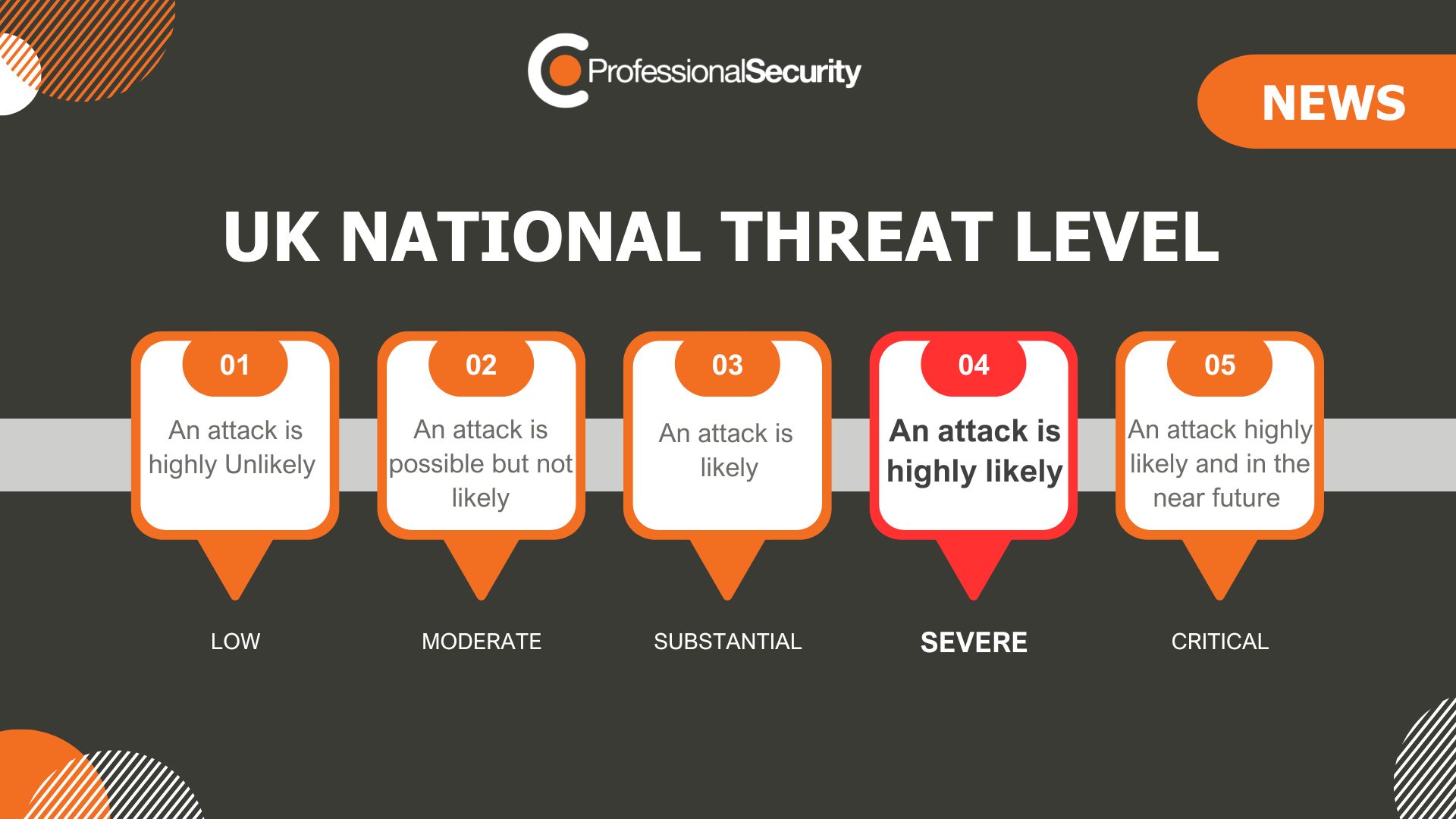
Last week, the UK national terrorism threat level was officially raised from SUBSTANTIAL to SEVERE, meaning a terrorist attack is considered highly likely.

The change, announced by the Joint Terrorism Analysis Centre (JTAC) on 30th April 2026, followed recent national security concerns and acted as an important reminder for businesses operating within public-facing environments across the UK.

Although there is no cause for panic, a SEVERE threat level reinforces the importance of vigilance, preparedness and strong frontline awareness – particularly in busy venues, crowded places and high-footfall environments.

For businesses operating in hospitality, retail, transport, events and leisure, this is a timely opportunity to revisit security procedures, communication channels and incident escalation plans. In addition, it is important that frontline teams feel confident identifying and reporting suspicious or unusual activity.

What does a SEVERE threat level mean? 

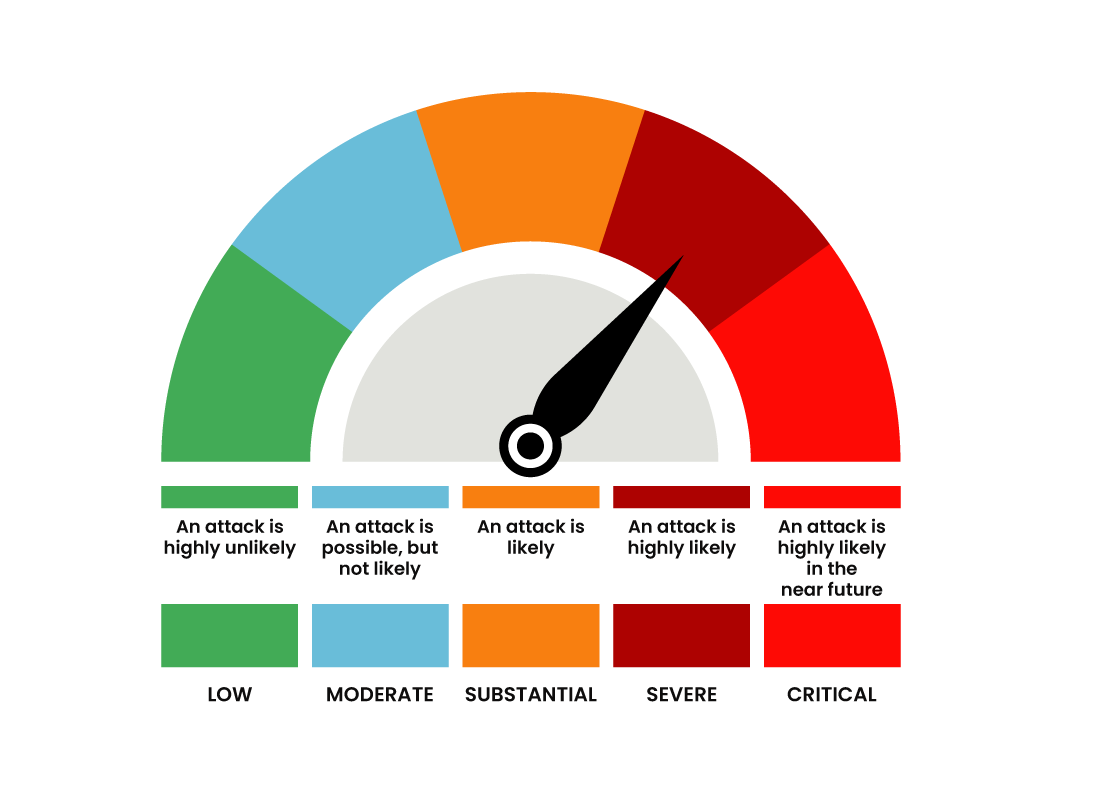
The UK threat level system ranges from LOW to CRITICAL and is designed to reflect the likelihood of a terrorist attack. 

A rating of SEVERE means that an attack is considered highly likely. 

Importantly, the rise to SEVERE does not necessarily indicate a specific imminent threat to one location or venue. However, it does reinforce the importance of heightened situational awareness, clear escalation procedures and strong frontline presence. Effective communication between teams also remains essential, particularly when reporting concerns quickly and confidently.

In environments where large numbers of people gather, even small details can matter. Because of this, officers and venue teams must remain alert to unattended items, unusual behaviour, hostile reconnaissance, entry point vulnerabilities or sudden changes in crowd movement.

Why frontline vigilance matters

In practice, security officers are often the first line of reassurance, prevention and response within public-facing environments.

Their role is not simply to be present. Instead, they must observe, assess, communicate and act when something feels out of place.

Periods of heightened national threat also require frontline teams to sharpen the fundamentals of good security practice, including:

Staying aware of surroundings at all times
Monitoring entrances, exits and crowd behaviour
Reducing distractions
Trusting professional instincts
Following site escalation routes without hesitation
Maintaining strong team communication

Together, these habits help create safer environments and allow concerns to be addressed early.

Additionally, security officers often provide reassurance to staff, customers and visitors during busy operational periods. Calm professionalism, visible presence and proactive awareness therefore play an important role in supporting both safety and confidence on site.

Reinforcing vigilance across our frontline teams 

Following the national threat level increase, Professional Security immediately reinforced guidance across frontline operations to support officers working across public-facing environments nationwide.

This internal communication focuses on four key principles: 

  • Stay vigilant on shift  
  • Trust your instincts  
  • Follow procedures  
  • Work as a team  

Team leaders and supervisors have continued encouraging officers to remain alert during busy periods, carry out proactive environmental scanning, report concerns through the correct channels and maintain clear communication on shift.

Rather than causing alarm, the focus is on reinforcing professional awareness at a time when attention to detail matters more than ever.

Female door supervisor checking an ID

A reminder for venues and public-facing businesses

Meanwhile, venue operators, hospitality groups, retail environments, transport providers and event organisers should also use the rise to SEVERE as an opportunity to revisit core safety procedures.

Key considerations may include:

  • Ensuring frontline teams receive up-to-date briefings
  • Reviewing escalation and reporting procedures
  • Checking communication devices remain operational
  • Monitoring entrances, exits and congregation areas effectively
  • Maintaining visible supervisory presence during peak periods

Ultimately, strong security preparedness is rarely about dramatic overnight changes. Instead, it comes from consistently applying good operational disciplines, maintaining awareness and ensuring teams understand how to respond when concerns arise.

Preparedness starts with awareness

Although national threat levels may change, the core principles of effective security remain the same: alert people, clear communication and strong teamwork.

As a result, Professional Security continues to work closely with frontline teams and clients to help maintain safe, secure and well-managed environments across the UK.