
Tick Tock Tax O'Clock

HMRC Security Industry Compliance Hub

The Security Industry Is Under Increased HMRC Scrutiny

HMRC investigations into the private security industry are ongoing, with increasing focus on labour supply chains, payroll compliance, and fraudulent employment practices across the sector.

What began as industry warnings in 2025 has now moved into active enforcement, investigations, and increased supply-chain scrutiny across the UK security sector.

HMRC has recently released new guidance around Private Security Industry Supply-Chain Fraud, highlighting serious concerns around non-compliant labour providers, hidden payroll fraud, and tax avoidance schemes operating within the industry.

For security companies, venues, hospitality operators, and event organisers, compliance is no longer optional.


What Is Supply-Chain Fraud in the Security Industry?

HMRC has warned that organised criminal activity is taking place within parts of the UK private security industry through fraudulent labour supply chains.

In many cases, security officers believe they are being employed correctly and that Income Tax and National Insurance contributions are being deducted from their wages as normal. However, HMRC investigations have uncovered cases where companies deduct tax and National Insurance from workers’ wages but never pay that money to HMRC, with fraudulent labour providers using complex subcontracting chains to hide accountability and avoid tax liabilities.


As a result, workers can be left without:

  • Correct PAYE records
  • Employment protections
  • Pension contributions
  • Statutory benefits
  • Financial security

At the same time, venues, hospitality operators, event organisers, and businesses using non-compliant security suppliers may also be exposed to significant financial, legal, and reputational risk.

How Does Supply Chain Fraud Work?

Supply-chain fraud within the security industry can take many forms, often hidden behind complex labour arrangements and unclear employment structures.

Some of the most common warning signs include:

1. False Self-Employment

Security operatives being labelled as self-employed when they work under: Set hours, Direct supervision, Company control

2. PAYE & National Insurance Avoidance

Failure to correctly process: Income Tax, Employer & employee NI contributions

3. Labour Supply Chain Abuse

Use of intermediaries or subcontractors to disguise: Employment relationships, Tax responsibilities

4. Lack of Audit Trail

Businesses unable to demonstrate: Right to work checks, Contracts, Payment structures, Compliance processes.

What HMRC Expects From Security Providers

HMRC’s latest guidance reinforces the importance of proper employment and payroll practices across the security industry.

This includes:

  • PAYE employment models
  • Correct Income Tax and National Insurance deductions
  • Transparent payroll processes
  • Proper worker screening and vetting
  • Clear labour supply chains
  • Due diligence checks on subcontractors
  • Accurate employment status
  • Record keeping and compliance monitoring

Without proper due diligence, businesses could face financial penalties, operational disruption, and increased HMRC scrutiny.

Warning Signs of a Non-Compliant Security Provider

When selecting a security partner, businesses should be alert to potential warning signs of non-compliance.

These may include:

  • Unrealistically low charge rates
  • Cash-in-hand payment requests
  • Self-employed door supervisors
  • Heavy subcontracting chains
  • Lack of payroll transparency
  • Frequent company name changes
  • Workers unsure who employs them
  • Inability to explain PAYE processes
  • Poor compliance documentation
  • No recognised industry accreditations

While low-cost security may seem attractive, it can create significant long-term financial and reputational risk.

Why PAYE Compliance Matters

The private security industry relies on trust, accountability, and professionalism. Therefore, businesses must also ensure their employment and payroll practices meet the same standard.

A compliant PAYE employment model helps ensure:

  • Workers are treated fairly
  • Tax and National Insurance are paid correctly
  • Employment rights are protected
  • Labour supply chains remain transparent
  • Clients reduce exposure to compliance risk

Ultimately, strong compliance protects workers, venues, clients, and the wider reputation of the security industry.

Our Position on Industry Compliance

At Professional Security, we support fair employment practices, transparent payroll processes, and responsible supply-chain management across the security industry.

We believe security officers deserve:

  • Fair pay
  • Proper employment protections
  • Clear payroll processes
  • Stable working opportunities
  • Professional standards across the industry

As a national security provider operating across hospitality, events, leisure, retail, and public sector environments, we understand how important transparent and compliant labour practices are throughout the supply chain.

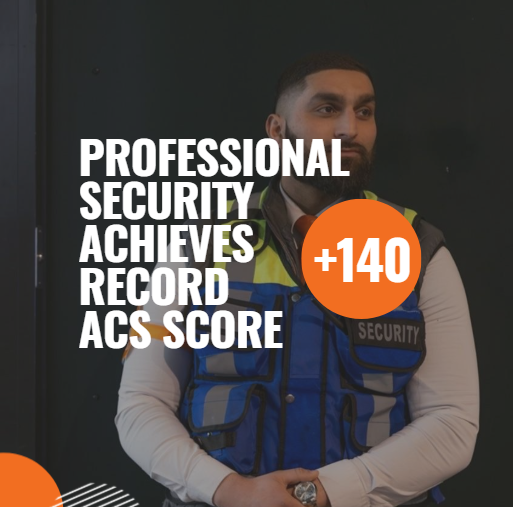
A door supervisor from Professional Security guarding a bar

HMRC Guidance & Further Information

HMRC advises businesses to review their labour supply chains and apply supply-chain due diligence principles when selecting labour providers and subcontractors.

For further guidance, visit GOV.UK and search:

“Applying supply chain due diligence principles”

Need Support Reviewing Your Security Supply Chain?

Understanding compliance responsibilities within the security industry can be complex, particularly where subcontracting or temporary labour is involved.

If you would like to discuss security compliance, labour transparency, or responsible supply-chain practices, our team can help.